


In the World of Olive Oil, and Why We Should Fall in Love with Extra Virgin
“I am starting the “Artichoke and Olive Oil with Anna Petkova” column with great excitement. I chose exactly this name because the artichoke and olive oil are very alike - quirky and multilayered, with amazing flavor and aroma characteristics that reveal themselves to us gradually - leaf after leaf, dish after dish. Both products require patience, love and curiosity to get to know them, and extra virgin olive oil also requires devotion to become an exciting part of our day, for health and creative inspiration.
Every month I will reveal secrets about this noble and bountiful life-giving liquid, also known as amber elixir and liquid gold. And gradually, I hope, the love for extra virgin olive oil will captivate you, just as it captivated me years ago. And there is no going back.
I wish you health and happiness with food,
Yours, Anna”
Source: https://www.bacchus.bg/
Let us start with a little history - the olive tree knows how to tell a gripping story, with so many millennia behind it. It has been with us humans for a full seven or eight thousand years. It was born in the lands of the Levant in the eastern Mediterranean and has been tended since Antiquity, and its juice was highly prized and ranked among the most traded agricultural products in this part of the world, alongside wine and wheat. It is known as the “oil of the West” and, together with sesame oil, called the “oil of the East”, they are considered the oldest vegetable oils used purposefully by humans.
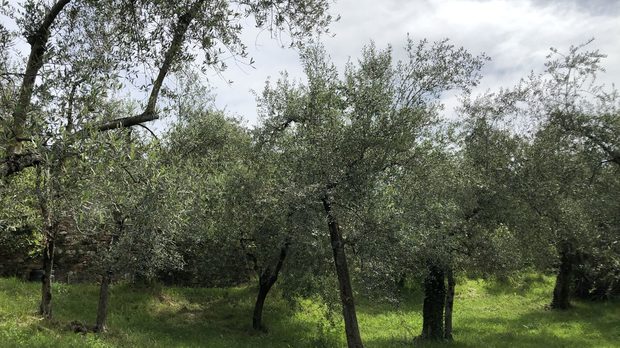
It was thanks to the Phoenicians that olive oil became a valuable commodity and the tree was “moved” and planted westward, all the way to the lands of Portugal. On the island of Crete it has been cultivated for the last 5000 years, and there is no thrill like finding yourself in the embrace of the stately tree in the village of Vouves, which
at 3200 years old is probably the oldest olive tree still alive.
It is of the local Tsounati variety and still delights with its fruit, while it filled me with immense admiration and wonder with its fantastical shapes and proud bearing. I literally lost myself in it. Even today, olive oil is an integral part of the local culture and cuisine. On Crete, consumption is the highest in the world, about 36 l a year per resident; everything there is cooked with olive oil, and it is no accident that the local cuisine is so appealing and delicious, while the islanders take pride in their robust vital statistics. In the countries of the Mediterranean basin, average consumption is about 18 l a year.
The explorative spirit of European missionaries carried the olive tree to the other continents as well, and this is how
the term known from wine, “New World”, came about, which has been developing intensively over the last 100 years.
It thrives in lands lying in the geographic belt of 25°-45°, and today we can taste olive oil from California, Chile, Uruguay, Brazil, South Africa, Australia, New Zealand, even Japan on the island of Shodoshima, where you can gladly join in the harvest and leave after a full day of picking rewarded with a small 200 ml bottle full of the precious fresh nectar. Yes, for 1 l of olive oil, depending on the variety and ripeness of the fruit, about 8-9 kg to 13-14 kg of healthy olives are needed when “early harvests” are made and the fruits are still bright green and full of chlorophyll and many polyphenols. This is one of the many closely guarded secrets of excellent extra virgin olive oil.
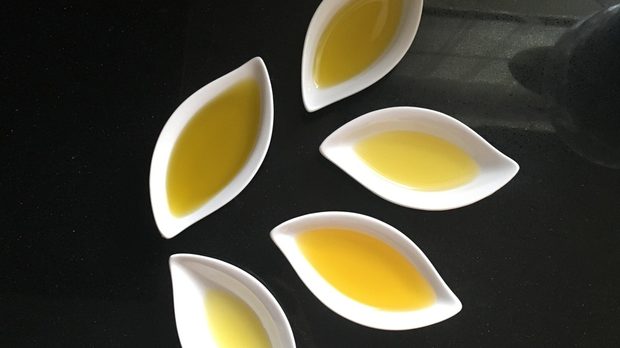
The biodiversity of the olive tree, with the botanical name Olea europaea, is remarkable! Have you ever imagined how many olive varieties for oil there could be? A full 1275 studied varieties, with Italy standing out with the richest palette of 538 kinds, Spain with 262, and Greece with 52 - these are the three countries that contribute the most to olive oil produced globally. Turkey is a very interesting country - supposedly not so familiar to us for its olive oils, it ranks in the top 5 and arouses interest not only with its 80 varieties, but also with very high-quality and distinctive olive oils, winners of numerous international competitions. Tunisia, with 44 varieties, impresses with its rapid development and a place in the top five in recent years. In countries such as Lebanon, Syria, Jordan, Israel, Albania, Montenegro, Croatia, Slovenia and others, we can also taste impressive olive oils from local varieties. In Greece, besides the well-known and most widespread Koroneiki variety, we can taste olive oil from the Chondrolia variety in Halkidiki, Makri in the Alexandroupoli area, Amfissis on the Pelion peninsula and others, traveling south and across the islands.
It is similar in the other 23 countries of the Mediterranean basin, revealing to us a multilayered aromatic palette and intensity of
the three important characteristics - fruitiness, pungency and bitterness.
Yes, the last two qualities of olive oil are part of its positive and distinctive characteristics, which are necessarily evaluated. It is a myth that good olive oil must be mild and sweet. There are varieties that bring softness and delicacy of flavors and aromas, and others that take us far away as an experience for the palate. We should not be bothered when olive oil is peppery and “bites” us in the throat, and even provokes a cough. It is a sure sign that the content of valuable polyphenols is medium to high, and they speak of health and an exciting taste for the senses. There is no other natural and such a unique fat whose composition includes about 40 phenolic compounds, vitamins (E, K, A) and hydrocarbons (squalene), with an anti-inflammatory and protective function.
As with wine, so with olive oil, every year is unique and distinctive. For producers, different harvests bring the challenge of balancing the lipids, polyphenols and water content in the fruit to achieve the best result. What is unique about extra virgin olive oil (the highest category of olive oil) is its purity - it is 100% natural juice of the olive fruit, no more, no less. With no additives in the production and storage process. This is amazing, because nowadays we do not come across many products that are so naturally pure and so rich in beneficial content. And at the same time offer us such a rich palette of flavors and aromas, with intensity ranging from delicate through medium to bold, which we can skillfully combine with food. Extra virgin olive oil is a super fat without an equal in its category. It can only and solely bring us pleasure and bring us health, carrying us to the Mediterranean on waves of happiness and abundance. Every day.
In the next issue of the column by Bacchus expect: Olive oil and food - why it is a myth that you cannot cook with extra virgin using heat