

Olive Oil and Children
From the author’s series “Artichoke and Olive Oil” by Anna Petkova
Source: https://www.bacchus.bg/
From the mouth of a child, “yes” is the sweetest and most natural answer to the question “Do you love olive oil?”. I have witnessed this “yes” many times, and that is because children are intuitive, natural and carry an inner knowledge that we adults have often buried as we grew up. Knowledge about taste, naturalness and what is truly good. And we adults are the ones who, besides learning from children and trusting them, bear the responsibility of being their example and
creating balanced eating habits for them.
Specialists say that the first 1000 days of a child’s development are decisive, and the first 7 years are key to their health as an adult. And here quite naturally comes to my mind the thought of Pythagoras, still relevant today after 2500 years - “Choose what is best. Habit will soon make it pleasant and useful”.
For children it is especially beneficial to cultivate the intake of varied food in moderate amounts, rich in slow carbohydrates and those with a lower glycemic index, in fiber and good fats. An example is the so-called “Mediterranean diet”: fruits, vegetables and leafy greens, legumes and grains/ whole grains, honey, herbal teas and nuts, a balanced intake of poultry, fish, eggs and dairy (goat and sheep milk are recommended). Variety and seasonality. And here we arrive at olive oil: in the 23 countries of the Mediterranean basin, for millennia it has been at the heart of most dishes. It is no coincidence that the vital statistics of the population in these countries are more robust.
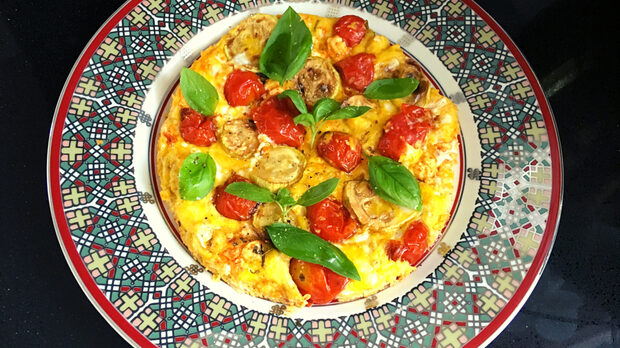
It is an indisputable fact that fats play a key role in children’s growth and development and support important processes in the young body. They are necessary for building the central nervous system and for brain function, for vision, thermoregulation and the muscles, for skin and hair, for the absorption of the fat-soluble vitamins A, D, E, K. They are the energy fuel that the young body needs, and pediatricians recommend that they make up about 1/3 of daily calories. It is only natural here to open up
the topic of good and bad fats,
with the natural ones, i.e. those that have not been altered and substantially processed, ranking among the good. Trans fats or hydrogenated ones (saturated with hydrogen), refined oils treated with chemicals at extremely high temperatures that have lost their naturalness, are the fats we need to be especially careful with. They are often part of the composition of industrial packaged foods that are attractive to children, for snacking “out” or in front of the computer. We know that they somehow captivate with their enhanced flavors. Today it is often a challenge for parents around the world to limit these foods; however, it is indisputable that when healthier habits are built in the family from early childhood, they remain a good foundation in later age as well.
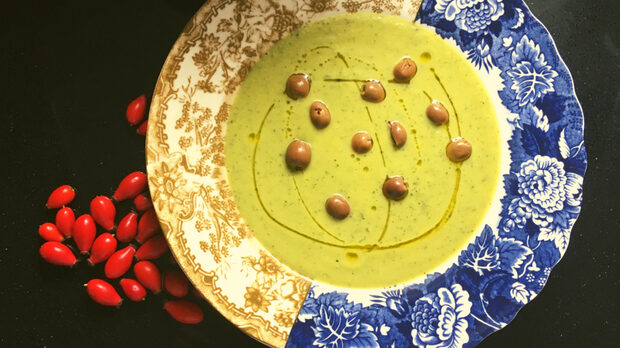
Olive oil, whose benefits we have been discussing for the fourth month now in “Artichoke and Olive Oil”, is a tasty and healthy fat for children’s diets. Because it has:
- A pleasant and natural taste. The rich variety of olive types makes it possible to introduce mild extra virgin olive oils with the weaning of the baby from around the 6th month. Children’s olive oils - and they are described as such on the label - have a delicate fruitiness, for example the Arbequina varieties from Spain, Taggiasca from Italy, Chondrolia from Halkidiki and others. Some producers have taken care to develop a special children’s range of olive oils. My experience shows that older children like the more pronounced olive oils, already accustomed to the pleasant taste of olive, herbs, ripe apple or banana, sweet nuts and other natural aromas. I have heard comments from parents such as “Maria does not like the taste of olive oil, she prefers tarator with sunflower oil” (author’s note - i.e. the child is used to refined and neutral-tasting food), and here I answer that the taste for food is cultivated and one easily gets used to what is good - one only needs to start with it.
- A balanced triglyceride composition. Here we mention the fatty acids Omega 9 (with a beneficial effect on the cardiovascular system) and Omega 6 and 3, as well as saturated fats (approx. 15%). With its composition, olive oil supports digestion and maintaining a healthy body weight, which is especially relevant for Bulgaria. The data from the national nutrition survey of schoolchildren aged 6-19 from 2010-2011 are alarming - 30% are overweight and 13% are obese, while the risk of Type 2 diabetes, high blood pressure and elevated bad cholesterol remains significant. So do manifestations of anxiety and depression.
- Beneficial substances such as phenolic antioxidants, vitamins E, K and A, squalene. They have anti-inflammatory, immune-stimulating and anti-allergic effects. I immediately think of a traditional chocolate recipe in Andalusia, a substitute for the popular chocolate spreads in jars. It is good for a slice of bread at breakfast and we can whip it up ourselves in the morning - with a little olive oil, cocoa and honey. Children there adore it and grow up with it.
It is interesting to know that in Italy, Greece, France, and probably in other countries where olive oil is produced, children gladly take part in tastings at school and even as a jury in competitions for choosing the best oils (a good example is the competition in Paris Olio Nuovo Days, Kids selection, with a jury aged 5-11). The children’s choice favors delicate olive oils as well as more intense ones, for example from the Greek Koroneiki variety, which by nature has pronounced pungency.
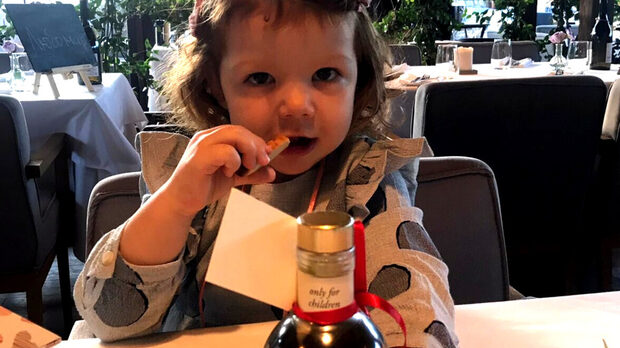
And finally - educating for olive oil consumption also shows an attitude of care for the environment. The olive tree, besides being among the most ancient and most commonly cultivated trees, is an agricultural species still untouched by practices of biological DNA modification. It has a negative carbon footprint, and every liter of olive oil produced “absorbs” through the tree’s roots and soil almost 11 kg of carbon dioxide. It also saves water resources, unlike other crops that require huge amounts of water to grow. It is amazing that the scarcer the natural conditions, the richer in valuable polyphenols and the more interesting in character the olive oils are. Yes, we adults, through children and their food, take care of the future - theirs, but also that of the environment.