

Artichoke and Olive Oil: Flavors, Aromas and Organoleptics
From the author’s series “Artichoke and Olive Oil” by Anna Petkova
Source: https://www.bacchus.bg/
The theme of the flavor and aroma palette of olive oil is perfectly in tune with the abundant green of spring and the richness of the autumn that is already arriving. Just as these two seasons charge us with many-sided sensations and perceptions, olive oil amazes us with its layers and depth. What is the big deal, some of you will say, isn't it just olive oil?! I will surprise you with my answer that in extra virgin the volatile compounds number more than a hundred, and some of them are directly related to the aromatic perceptions of olive oil, as well as to its complexity. For example hexanal, which is responsible for the scent of greenery and freshly cut grass. It is sensed when we bring our nose close to a glass of olive oil or give a finishing touch to a dish. And from the first bite that our palate welcomes, we feel freshness and greenness and are literally transported to a spring meadow with fragrant herbs and wildflowers.
And this is only the beginning of the journey for our senses!
It can be longer and more varied with complex and distinctive extra virgin olive oils, or simpler with the more unassuming ones. Generally, this depends on the olive oil's path (the genetics of the variety, the climate and the soil) and how masterfully it is made. Biodiversity is an essential factor (let us not forget that the genetically registered olive varieties number over 1200!), as is whether the trees are young or centuries old, how the soil is cared for, and to what extent the natural ecosystem of the place is preserved. And that place can be flat and spacious like the terrains of Andalusia and Apulia, or hilly like those in the Douro river valley or around Lake Garda. And in this way we can have a completely different character of the oil, even from a single olive variety.
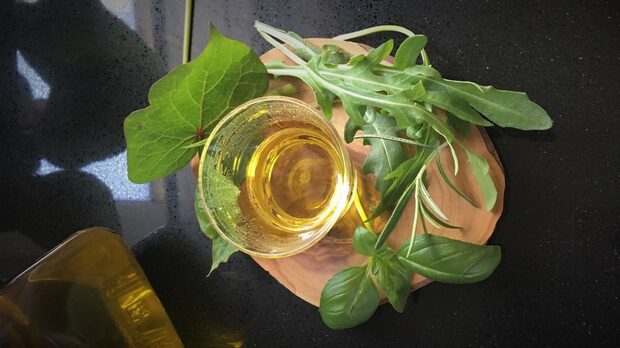
When we talk about olive oil, the aromatic notes fall into several groups:
fruits (ripe and still green, the most typical being apple, banana, citrus),
aromatic herbs (fresh and dried, mainly from the Mediterranean),
spices (spicy and sweet, such as black pepper, green pepper and cinnamon),
nuts (in most cases ripe and sweet, almonds and hazelnuts being characteristic),
wildflowers,
leafy green vegetables (arugula, chicory, radicchio),
leaves (olive, fig, tomato).
What is important for me to highlight here is
the key role of the grass/leaf and tomato/green almond characteristics.
They are the starting point when we set out to taste an olive oil. Everything else is high-level piloting that takes time and training of the senses, and many tried and tasted olive oils. In general, as with wine, expertise comes with drinking and with calibrating one's perceptions against other tasters from a professional panel or jury.
Here is what I mean above: every certified olive oil expert (taster, sommelier, oleologist) begins a tasting with the questions - freshly cut grass or leaves, tomato or green almond. And my advice to you is, when you bring an olive oil close to your nose (best in a small glass, warmed beforehand by the touch of your palm), to focus your attention on whether you detect aromas of freshly cut grass or olive leaf, whether your perception is of tomato - leaf, stem, fruit - or of green almond. For us Bulgarians tomato is easier to recognize, while with green almond some pitfalls may arise, because it is not as familiar to us. Here the annual catalogs of various professional organizations and olive oil competitions come to the rescue, mainly in the producing countries, where the above characteristics are clearly indicated. Also the knowledge of varieties, which experts acquire and pass on.
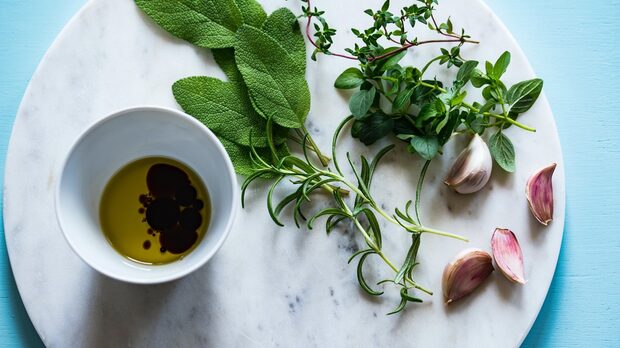
For example, the Picual variety from Andalusia (the most significant for Spain and the world) genetically carries notes of tomato, and depending on the ripeness of the olives at harvest it can be of green tomato and leaves, or of riper and sweeter tomato, even tomato puree for sauce. Pay attention when you taste this variety - it can be found in Bulgaria in the retail market. Or the Coratina variety from Apulia (the most significant for Italy) has typical notes of green almond.
Most Tuscan and Croatian olive oils are also "green almond",
while Spanish and Turkish ones are "tomato", and Greek ones are somewhere in between. Tasting several single-variety olive oils in succession is very useful for distinguishing and remembering the aromas; my personal experience with my students and course participants has shown this many times.
All of us have remembered a wine for a long time, and here is the moment to assure you that olive oil is similar. There are olive oils that reveal themselves slowly and gradually, distinguished by the characteristics of harmony on the nose and in the mouth, complexity and persistence of perceptions. Green almond and rosemary, pine nuts and green banana peel, artichoke, arugula and nuances of green pepper, and depending on our mood and concentration we can discover still other aromas, and all in just one olive oil! Other remarkable extra virgin olive oils have more pronounced fruity and sweet aromas - of banana and hazelnuts, pink pepper and dried herbs, fig leaves and wildflowers, ripe tomato.
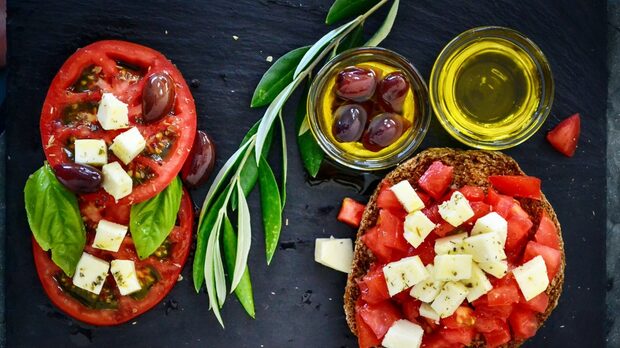
The intensity of the perceptions is assessed on a 10-point scale by the IOC (International Olive Council), and so an olive oil can be delicate, medium or intense in the profile of the characteristics fruitiness and pungency. It is precisely this broad palette, depending on the variety, terroir and craftsmanship, that allows extra virgin to be a brilliant and many-sided hero of culinary art, both professionally and at home. And for us connoisseurs to have several open bottles at hand for every situation - from delicate fish with steamed vegetables with a delicate Arbequina, through celery carpaccio with citrus dressing with an early harvest of the Koroneiki variety, to dark chocolate mousse with raspberries and drops of peppery Picual. Did you know that one of the most elegant chocolate mousses is made with olive oil?
I will make a small parenthesis, because there are also
olive oils with defects, most often a result of fermentation and oxidation.
For untrained people, aromas reminiscent of wet leaves and mushrooms, of a damp forgotten cloth, of acetone, vinegar and pastels, of dirty socks and tapenade, of rancid nuts and old fat, are a sign of a defective olive oil with altered taste and aroma.
This is the role of the olive oil sommelier - to know the diversity of varieties and their potential and how they best pair with different kinds of food. To single out olive oils with defects that alter the taste and aroma characteristics of the food. To experiment in the kitchen and to choose not only an olive oil profile that harmoniously complements the dish, but also one that provokes the senses and brings contrast, and a peculiar transformation of well-known flavors. For euphoria and slow enjoyment of food.