

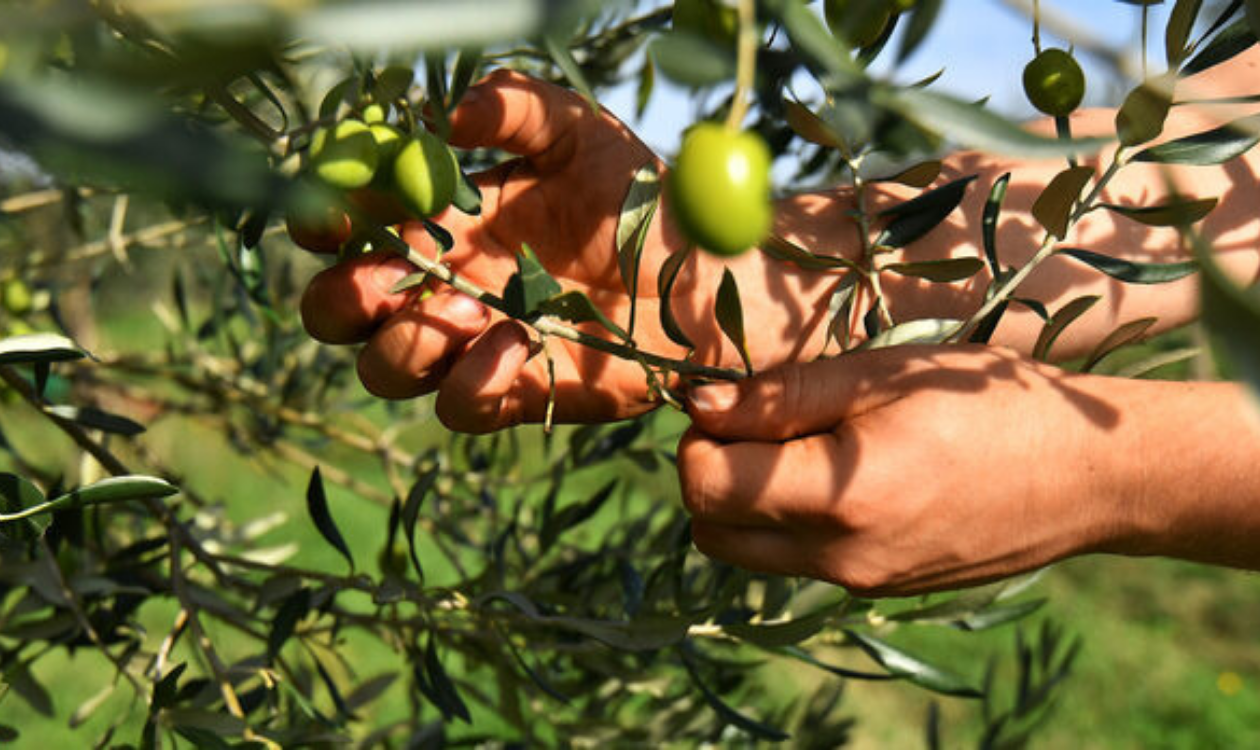
Olives on Three Peninsulas
From the ISSUE of Bacchus with Anna Petkova
Source: https://www.bacchus.bg/
The Balkans always stir excitement in me, and I find that in recent years, when I have to choose where to travel, it is usually somewhere nearby on our many-faced peninsula. The mixture of cultures and that energetic charge between East and West make experiences in these latitudes unpretentious and always full of surprises.
The Balkans host, wholly or partly, eight of the 23 Mediterranean countries that have cultivated the olive tree for millennia. The Mediterranean climate and the geographic position between the 36th and 45th parallels bring a rich biodiversity of varieties, styles and olive oil profiles.
That is why, in my role as an olive oil sommelier, I take you on an olive oil stroll from the north to the south of the Balkans, across three peninsulas - Istria in Croatia and the Greek Pelion and Peloponnese. You will see them through the eyes of the people and producers I have met on my travels there. Add these three places to your gastronomic map of desired destinations.
Istria
It is a divine corner of the earth, blessed with sun, abundance and the Adriatic coast. The favorable Mediterranean climate is a true paradise for the olive tree. Since antiquity, the olive oil of this Croatian peninsula has been highly valued by the Roman emperors. Marcus Valerius Martial, who lived in the first century AD and was born in the lands of present-day Spain, sings its praises: "Uncto Corduba laetior Venafro, Histria nec minus absoluta testa": "Corduba, more fertile than Venafrum rich in olive oil; Istria, no less perfect than it."
But there is no need to go back so far to look for recognition of Istria. Some 2000 years after Martial, the olive oils of Croatia are honored with the highest awards: in 2020 Istria received the title "Best Olive Oil Region in the World" from the prestigious Flos Olei guide. What makes the peninsula special is the cultivation of local olive varieties, mainly buža, Istrian bjelica, crnica, moražola and rožinjola, two of them typical of the Vodnjan area.
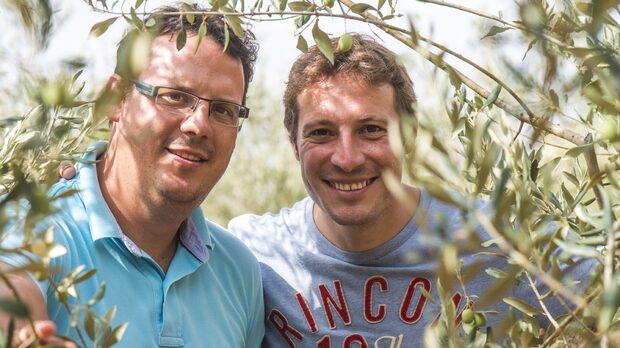
An unforgettable meeting with the Chiavalon family took me there - the two brothers are dedicated to high-quality extra virgin olive oil, with sustainable farming practices and the reproduction of the natural ecosystem. They make early October harvests in their own state-of-the-art "mill", with filtration at the end of the extraction. They grow 9500 trees, most of them planted after 1997. It is important to stress that the local government financially encourages the cultivation of the olive tree. That is why in the past 20 years 1 million olive trees have been planted in Istria, and the golden triangle from Roman times, Vodnjan - Fažana - Peroj, is still famous today for excellent production.
Coming from the 45th parallel (for comparison - Lake Garda, situated on the 46th parallel, is the northernmost point in the world of olive oil) and when well made, those from Istria can carry great complexity and depth of flavor and aromatic characteristics. They are known for an exceptional green freshness with intense green almond, aromatic herbs, artichoke and green apple, and the burning sensation of the leafy greens and their pungency are well above average. The latter is a sure sign of a high content of health-beneficial polyphenols in these palate-biting olive oils. In most cases they are blends of several varieties and offer many possibilities for skillful food pairing: wild asparagus and artichoke in spring, white truffles in autumn, fresh fish and specialties from the Istrian buffalo. And they are great friends with the beloved white wine variety Malvasia, which is held in high esteem. All reasons for Istria and the golden triangle to be a new culinary destination.
Pelion
Now in Greece, we move south to the magical peninsula, home of mythical creatures - the centaurs and Chiron, the nymphs and the Siren. Pelion is special for its abundance of everything: here there is lush greenery and countless plane and chestnut trees, apples, plums and citrus, as well as delicious mountain water gushing everywhere. The place comes with largely preserved traditions and with residents who have captured the hearts of returning tourists. I fell in love with the contrasts of this place. Embraced by the turbulent Aegean Sea to the east and the calm of the Pagasetic Gulf to the west, it has cool high-mountain paths and villages perched on the slopes, with the azure sea below them. Simple, unpretentious and at the same time magnificent when it comes to food.
And olive trees as far as the eye can see. In Pelion literally every family tends some, and they are predominantly centuries-old trees of the local variety amfissis (also known as amfisa). They bear fruit every other year, and the harvest is gentle on the trees and the fruit, by hand and with the help of electric poles with little-hand attachments. And the olive oil is simple, unpretentious and unfiltered, because the local mills do not have filtration equipment. It happens naturally in the stainless steel storage tanks, where residual tiny olive particles settle. That is why, when we buy from a local family, the olive oil may sit a bit thicker and cloudier. And once home, in Bulgaria, it is good to store it in a cool and dark place, preferably a cellar, at a temperature of 16-18° C, to preserve its qualities for longer.
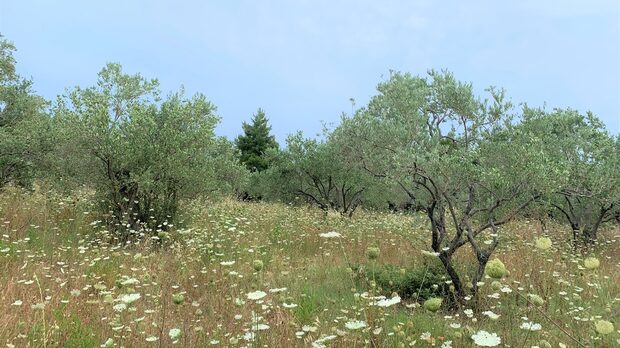
I will open a parenthesis: unfiltered olive oils are prone to fermentation and the defect "muddy sediment" because of residual olive particles, enzymes and water molecules, which leads to a change in their qualities. That is why I recommend using them sooner after buying from a local farmer in Greece or Turkey.
I had several olive oil meetings in Pelion that left a lasting impression. Producers of the younger generation make early October harvests in order to achieve more freshness, more pronounced fruitiness and a concentration of higher levels of polyphenols. The Patistis family, better known for their wines and organic approach, also make extra virgin olive oil. It was exciting to do a tasting of the wines from Greek varieties, the focus of the winery, such as xinomavro, roditis, limnio and assyrtiko, with their olive oil as the start to open up the sip. Expressive freshness of herbs and tomato on the nose, pleasant lasting mild pungency.
These versatile olive oils are a wonderful addition to everything - an authentic stew with sausages and vegetables or a lavish portion of imam bayildi, crispy pies with olives or with greens and goat cheese, Greek orange pie (portokalopita), a hearty fish soup and the salad of blanched sea fennel, generously drizzled with olive oil. The amfissis variety definitely deserves attention - both as olive oil and as table olives, emblematic of the region and irresistibly delicious.
Peloponnese
The last stop on our Balkan stroll is Greece's main olive oil region - after all, the country is a top 3 producer in the world! - and it is better known to us Bulgarians than the previous two places. It can be said that the olive oil from the southern Peloponnese, from the regions of Messinia and Laconia, even has a legendary status. The palace of King Nestor near Pylos in Messinia is also the place where, about 3500 years ago, the oldest written evidence of olive oil production in these lands was first found. There are even suggestions that the Trojan War was more about the trade in oil than about Helen herself.
The main Greek variety koroneiki, with its pronounced fruitiness and pungency, is found throughout the Peloponnese for the production of single-variety olive oils and blends. Alongside it, the authentic varieties manaki, kothreiki, tsounati and athinolia are grown, as well as the familiar kalamon, which we associate mainly with table olives.
The northeastern Peloponnese is less well known, so I introduce you to the region of Achaea, with its picturesque slopes descending to the Gulf of Corinth.
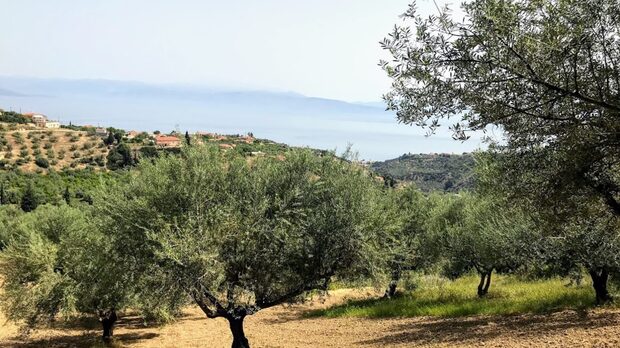
Ioanna, a television journalist by profession who has devoted herself to the family olive oil business for several years, began our conversation with the words "We live on a blessed land, rich in olive trees of the local variety patrini, also blessed with oranges and lemons, vineyards and vegetables filled with plenty of flavor." She describes it like an advertisement!
The region is distinguished by a hot and dry climate, which is a plus when it comes to protection from insects (such as the olive fruit fly). Terrains with more extreme climatic conditions, exposed to winds and drought, naturally stimulate the tree to accumulate more polyphenols in order to protect itself. That is why, tasting the early harvest of My Precious Olive Tree, I get multilayered impressions - from freshness and purity on the nose with notes of tomato to a sense of hay and dry herbs, chicory and sweet spices on the palate. All typical southern characteristics, marked by depth and more maturity than those of the North. The olive oil spreads elegantly on the palate and provokes with expressive bitterness, which gives way to insistent pungency. The oil is extracted at the best mill, 70 km away, and the malaxation of the olive paste lasts only 20 minutes at a strictly controlled temperature - this preserves its freshness and it does not "overheat", as traditionally happens with the older generation of farmers.
For me it was an exciting experience to adopt one of the trees for a year - this way I support a small producer and at the same time receive first-class olive oil, made under the skilled guidance of a recognized agronomist and oleologist.
Our olive oil journey in the Balkans passed through three regions in two countries, and although geographic features lead to quite different final products in profile, they resemble each other more than they differ, because of one common factor - the human hand. It gives the olive attention to every detail, sustainable care for the land, the trees and people's health. And a great deal of thought invested for today and tomorrow.