

Artichoke and Olive Oil: The Siwa Oasis Whispers of Olives
From the author’s series “Artichoke and Olive Oil” by Anna Petkova
Source: https://www.bacchus.bg/
There was not much preparation for this Egyptian and rather different journey, just a strong inner feeling that now was the time for it to happen. Add to that a check of the temperatures at the end of December or the beginning of January, so that there are no surprises or fuss when I find myself in the Western Desert or in the south, on the Nile, not far from Lake Nasser. And there I was.
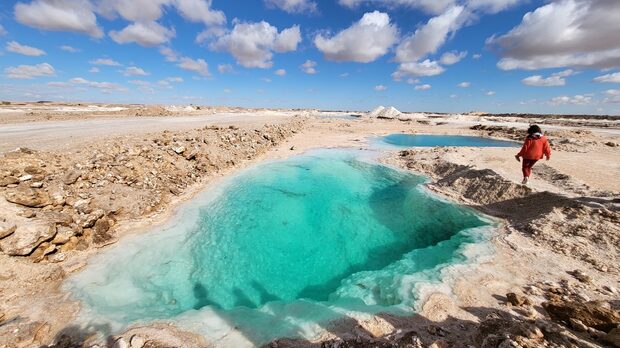
It is winter in Egypt too, but a mild and sunny one, reminiscent of our autumn, with cool nights and mornings that insist on a sweater or two in the suitcase. If you expect me to tell you about azure beaches and magnetic pyramids, I will probably disappoint you, but I am sure you will see Egypt through a different prism, no less attractive and interesting. And perhaps for some of you the desire to go west and south of Cairo will awaken, while for me the thoughts of returning to these lands will become more insistent! The beauty of the endless dunes, of the sparkling turquoise of the salt desert lakes, of the vast sea of olive and palm trees in the sands, and many more imprinted pictures take me back again and again to the west, to the desert, almost to the border with Libya.
Alexandria, our first stop, is thrilling. A city of five million people, buzzing with life, color and abundance. Founded by Alexander the Great, and having preserved the ethereal and so confident footsteps of Egypt's last queen, Cleopatra, the city is a blend of cultures, tastes and scents. It is now the season of the fragrant and juicy physalis, and the wooden carts piled high with fruit invite you to grab some and refresh yourself. Absolutely.
Alexandria, our first stop, is thrilling. A city of five million people, buzzing with life, color and abundance. Founded by Alexander the Great, and having preserved the ethereal and so confident footsteps of Egypt's last queen, Cleopatra, the city is a blend of cultures, tastes and scents. It is now the season of the fragrant and juicy physalis, and the wooden carts piled high with fruit invite you to grab some and refresh yourself. Absolutely.
Carob juice is also typical of Alexandria
and for me it was a memorable experience - dark brown, abundantly sweet, with an intriguing flavor that is definitely worth trying and has nothing I can compare it to. At the same street kiosk I also tasted an energizing drink made from the root called licorice, which resembles the more familiar candies and impresses with both delicacy and character. Alexandria has everything - authentic crafts and handmade goods in the small alleys, modern and contemporary-looking items in charming shops in the malls, many of them organic, as well as nice cafes with a generous Greek breakfast, and fish restaurants with overflowing abundance and freshness, and so much more - after all, the city is on the Mediterranean! And so, quite naturally and with much curiosity, the start of our gastronomic journey was set.
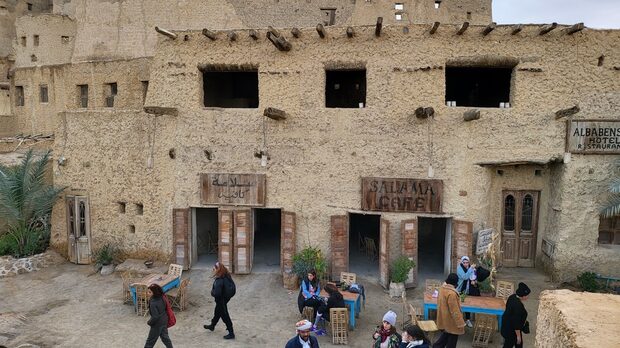
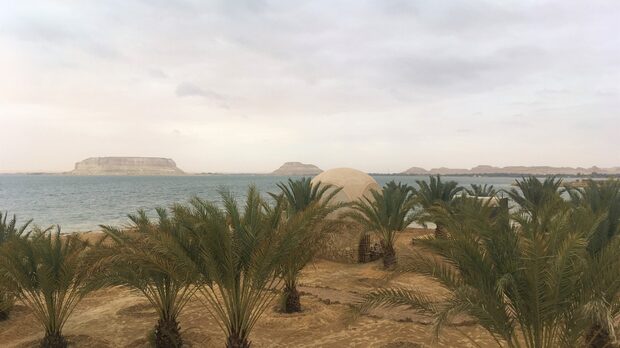
The main New Year destination of our small group of friends was the town of Siwa in the oasis of the same name - a garden of paradise. It lies in the Great Sand Sea and is home to about 200 sulfur-rich hot healing springs, many salt lakes (salt extraction is part of the local livelihood) and at the same time an abundance of fresh underground water, which allows agriculture to flourish in the region. I should explain that everything grows in the sand - more than 32 crops are cultivated, mostly fruit trees, vegetables, leafy greens and, of course, the famous dates and olives. After 8 hours on a straight two-lane road through the middle of the vast desert and 7 police checks (mainly for alcohol: two of our bottles of Bulgarian wine had been carefully entered in our passports on the visa back in Alexandria, since officially, from November 2021, only 1 l of alcohol may be brought into the country) we arrived after dark at our eco hotel. The welcome there was magical: a path of burning torches leading to the cottages made of natural materials, and charming rooms lit only by candles. So began a promise of four very special days.
Reading guidebooks in advance is not my strong suit when I travel, so my amazement at finding myself in the mecca of olive trees was genuine. And my joy at seeing vast groves of older and younger plantings, growing literally in the sand, was sincere.
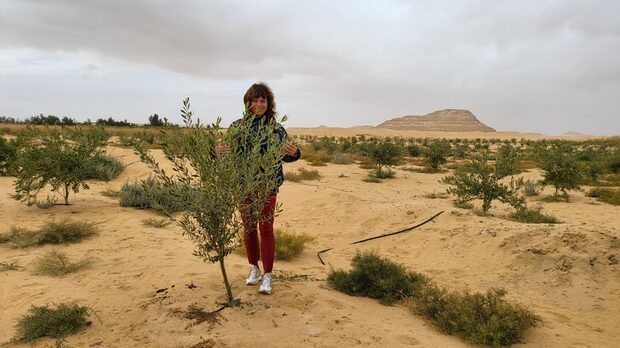
It is a fact that Egypt has for years been the world's leading producer of table olives and that it makes extra virgin olive oil (nearly 40 000 tons last season, or 1.3% of world production), and products of the largest producer, Wadi Food, have won major international competitions. It is also a fact that in 2019 the country announced its ambition to plant 100 million trees for olive oil, and in two years half of them have already been planted.
Still, finding yourself in the desert among hundreds of trees is a real wonder!
The Siwa oasis has traditions in cultivating olive trees dating back to antiquity. Over more than 70 thousand decares, about ten mostly local varieties with different fruit characteristics and ripening are grown. I tried black and green ones, and my favorite became a smaller variety with a beige-pink color in the brine. I admit that the olive oil itself did not impress me with its sweeter notes - it was cloudy and "tired", as we politely say of an olive oil that has already begun to go rancid. But that did not surprise me. The tradition of the older generations in the Mediterranean countries is to harvest olives late, and here, at 29 degrees latitude, early harvesting matters hugely for the freshness and quality of the oil (for comparison, the Peloponnese peninsula is at 37°, and the Istria peninsula at 44°). The technology too, as we already discussed in November about the mastery of olive oil production.
But the black olive preserve truly impressed me.
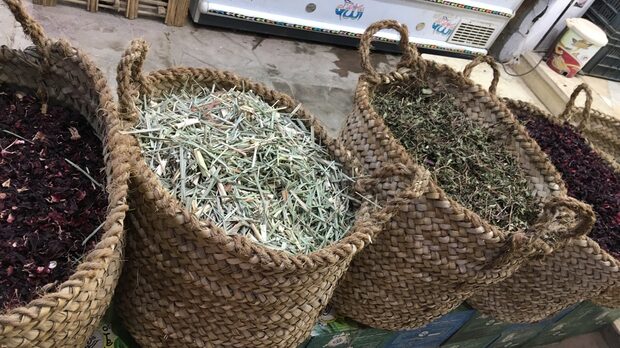
An expressive preserve with a delicate saltiness, with the aroma of rosemary and the freshness of lemon juice. Since I tried olive rachel in the Ciya restaurant in Istanbul, I had not tasted anything more remarkable. Alongside the orange-peel and dried hibiscus flower preserves that are traditionally made here.
Siwa is a remarkable oasis, about 80 km long and 25 km wide at its widest part, with a little under 30 thousand inhabitants, and it is a protected region of Egypt. Until the 80s, when the asphalt road from Alexandria appeared, Siwa was largely isolated from the outside world. It is authentic in the traditions and customs of the Berber tribes that inhabit it, and attractive because it lay on the caravan route between Morocco and Mecca. Many pilgrims traveled through and brought novelties to the community, though in moderation. Even today it is a delight to see the beauty of the traditional embroidered women's garments and shawls in the shops, the clay vessels and those woven from palm leaves, the lamps and candlesticks made of local salt.
Food is held in great esteem, and hospitality is endless. And everything begins with breakfast (usually at 7-8 a.m.), which we likened to a lavish Sofia brunch. A stew of local fava beans (ful), cooked overnight on a low flame in a clay pot, freshly baked flatbread aish baladi, falafel and greens, pickles (with tempting little baby eggplants) and olives, fresh cheese, eggs in every form, baba ganoush, preserves and dates, of course. There is no way without them! A whole 8 kg annual consumption falls to each inhabitant of the oasis, which tends 280 thousand palm trees and their fruit. The flavor qualities of the local dates are remarkable, both fresh and dried, and are prized around the world. It is no accident that since 2006 they have been a Slow Food Presidium, aimed at preserving the local varieties and growing traditions, as well as supporting the farming community and livelihood.
In addition, I tried unforgettable tea of lemongrass and nana (mint), which are traditionally grown by the local people, freshly squeezed lemongrass juice, the vitamin-rich green soup molokhia with a flavor of spinach and beet, chicken with olives and okra stew. The street food in the town is also worth it, because it is fresh and prepared before your eyes; I won't hide that we made several rounds of falafel with baladi salad in baladi pockets and all kinds of appetizers and pickles (author's note - baladi means local).
These were only some of the thrills in Egypt; we experienced many others in the south, in the lands of Nubia, on Philae Island, not far from the town of Aswan on the Nile. Some of the meat delicacies, some on the list of disappearing foods in Egypt, and the people who prepared them for us stayed with me forever - the mish cheese fermented for at least six months in a clay pot, the multilayered flatbread with ghee fatir, the sun-fermented bread shamsi. There will be a return, by all accounts!