

Lola Sagra on Nobleza del Sur Extra Virgin Olive Oil and the Quiet Revolution in Jaén Olive Oil
Last year, 2019, the Cinema Gourmet program of the Sofia Film Fest included a cleverly conceived and masterfully shot documentary dedicated to the Andalusian province of Jaén, known as the World Capital of Olive Oil. The film told of the quiet revolution carried out by a new generation of talented olive oil producers, who successfully demonstrate that their traditional and emblematic picual olive variety can yield the highest-quality and most award-winning olive oils in the world.
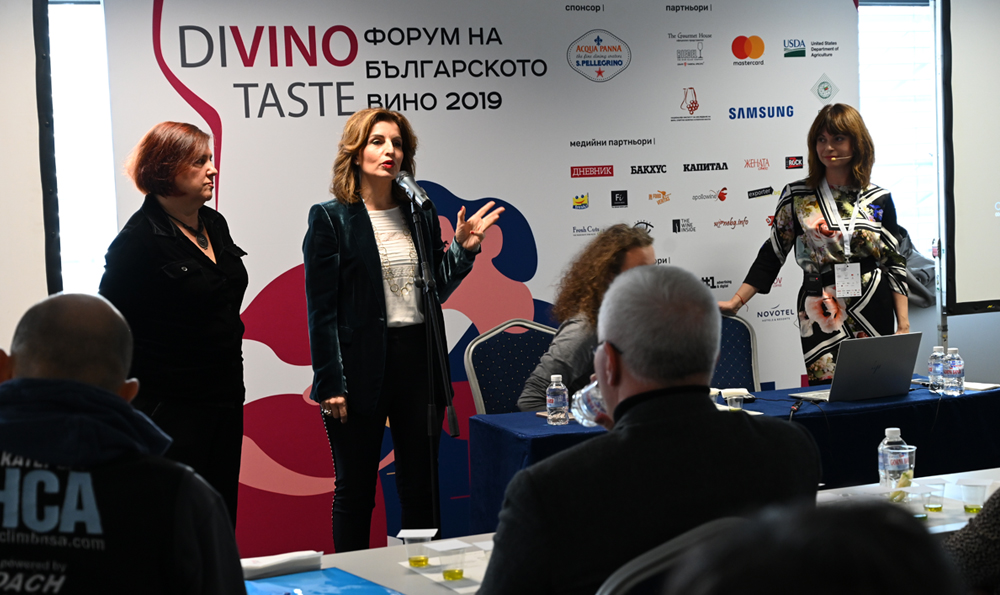
With some preparation on the subject, it was even more interesting to talk to Mrs. Lola Sagra, owner and CEO of Nobleza del Sur Extra Virgin olive oils, producers of magnificent olive oil. We had the pleasure of welcoming her at DiVino.Taste 2019 as a guest lecturer of a masterclass dedicated to olive oil. Señora Sagra is among the most successful representatives of the olive oil revolutionaries of Jaén. She is a vivid embodiment of her Andalusian land, with which she is in love: a proud and passionate lady, bold in her decisions, deeply attached to her roots. Today the premium extra virgin olive oils of Nobleza del Sur are among the best in the world, stand out at prestigious international competitions and have been rated 99 points in the Flos Olei guide, published by Marco Oreggia, an Italian olive oil taster expert of world fame and recognition.

Jaén - the paradise of olives and olive oil
Before Mrs. Lola Sagra tells us about her lands, olive groves and passion for nature and good olive oil, a short introduction is needed to the ocean of olives called Jaén, a province in the Spanish autonomous region of Andalusia. If Spain is the undisputed world leader in olive oil production, then Jaén leads all regions in the world, both in olive plantations and in olive oil output. The figures and facts are dizzying. More than 66 million olive trees are grown on an area of about 550 thousand hectares. Jaén produces about 50% of the olive oil in Spain and 20% of the olive oil in the world, more than the whole of Italy! Over 100 thousand families in the province make their main living from extra virgin olive oil (EVOO).
The truth is that the landscape across the whole province is a swaying, boundless ocean of olive trees. And in this ocean, among thousands of producers, the olive oils of Nobleza del Sur shine with their incomparable taste and quality, but also with their special spirit. We will learn the secret from Lola Sagra herself, who proudly says she is the 12th generation of her family in this craft.
A hereditary master of olive oil production
You are the heir of several generations of farmers and olive oil producers...
Just imagine - our ancestors have owned an olive grove since 1640, and there is historical evidence of it. In those times the olive grove was a means of livelihood, of survival. Since then, 12 generations of our family have continued to maintain and care for some of these olive groves. So love of the land is a hallmark of Nobleza del Sur Extra Virgin olive oils. It defines our identity and is like the emblem of the company.

Jaén is the olive treasury of Spain, like a huge state reserve. The largest producing region in the world. That is 66 million trees! Anyone who sees them for the first time is stunned, because in every direction, as far as the eye can see, stretch these woodlands cultivated by man.
Did you know from childhood that your life would be dedicated to olive oil? What education did you choose?
My grandfathers, grandmothers and parents marked my childhood and determined my future. I adored the farm and the olive groves from a young age and knew that I wanted to live and work there. I graduated in an engineering specialty devoted to getting to know the whole cycle and process of olive oil production, with the necessary equipment. So that I could dedicate myself to my current work.
Since childhood, the olive groves have been a passion for me. In fact, I cannot perceive life without olives. The olive groves are part of me.
True devotion to olive oil
How do your days, weeks and months go - yours and those of your family?
Caring for olives means that all year round we depend on the needs of these trees. Every season brings its own tasks - right now the harvest is being gathered, then come the production processes, then the pruning season... and time passes in constant thought and care for the well-being of the trees, in every single season. We are completely devoted to this farming work and to the whole process. We are farmers and we know no other way of life.
How does climate change affect Jaén? Are there any dangers for the olive trees?
Jaén is considered the paradise of olive oil. It is a blessed region and land where you can find olive trees that are 100, 200 and more years old. It is known that climate change leads to a slight rise in average annual temperatures, so at the early harvest we already have slightly higher temperatures. So far this does not cause us serious problems, but let us hope that in the future we will all join forces to stop these processes of change, in order to preserve the climatic conditions characteristic of each region.
Ecological farming for even better olive oil
Is most of the olive groves in Jaén grown conventionally?
In general, farming is traditional, not intensive. There is a limit on the number of plantings per unit of area. Yes, conventional farming, which uses pesticides and artificial fertilizers, still prevails. But there is one big change, tied to the change of generations - there is a marked interest in protecting the natural environment and in using more ecological farming practices. Many people have already moved from conventional to integrated farming, and we, together with other companies, decided to take even more steps in this direction and move to ecological farming.
This is happening not only with olives, but also in other agricultural sectors - as I learned these days in Bulgaria, in viticulture for example. Organically grown vineyards are still not that many, but more and more producers are thinking about it and taking steps in this direction. We must take advantage of this change of generations, so that it brings us added value; we must not only care for the olive trees, but do so with respect and attention to nature. And not only with regard to the needs of our generation, but also of future generations, of our heirs.
How did you come to produce top-class early harvest olive oils? How did you convince the previous generation that quality must take priority over quantity? In the past, everyone everywhere strove for a bigger yield and more output.
Exactly. In the world of olive oil, for Jaén there is a before and an after. And it is a historic change, a quiet revolution, as we call it. A revolution of quality extra virgin olive oil. Our ancestors were great farmers, we owe them everything and cannot reproach them for anything. Thanks to them we have this domesticated forest of 66 million trees! They were truly great farmers, but not particularly good merchants. For that reason the added value of our products went to the benefit of other countries, for example Italy. There they sold their olive oil in large tanks, and the Italians bottled it under their own brands as Italian olive oil.

Now we, the new generation, have decided to give our products that added value which is due to our land, our history, our accumulated knowledge, the quality of our work, our hard work.
We really did make a radical change, a revolution, with a reappraisal of quality and of the process - for the highest-quality olive oils the olives are picked early, the so-called early harvest, at that optimal moment of ripening when the premium olive oils are obtained, which win recognition and the highest awards in the world. Such is our case with Nobleza del Sur - an international guide as prestigious as Flos Olei by the universally acclaimed Italian taster Marco Oreggia rates our EVOOs at 99 points! We feel very happy and fulfilled about this.
Why is early harvest olive oil considered the highest-quality and the healthiest?
It is considered a new discovery, a revolution in the world of olive oil. But actually it is not! In ancient Roman times there was a great engineer, Columella (Lucius Junius Moderatus). From his writings on agriculture it is clear that at that time the olive oil from green olives was considered the highest quality. The problem begins with industrialization, when every country has to be self-sufficient and feed itself with its own products. Then everyone starts looking for quantities and producing and producing - more and more. That is when we begin to lose our quality face. History already tells us that at the optimal moment of olive ripening, which coincides with the early harvest, we achieve premium-quality extra virgin olive oils. They have a much higher content of polyphenols, vitamins, antioxidants, the whole palette of micronutrients that make an olive oil a product of the highest quality. They also have more freshness and much more distinct and pleasant aromas and flavor notes. When we compare an olive oil made from late-harvest olives with one made from green olives (as we saw today at the masterclass), it is as if we were comparing juice from overripe and slightly rotten oranges with juice from healthy, fresh oranges. Quality extra virgin olive oil is made from healthy green olives picked at exactly that optimal moment of ripening, and that is the wonderful olive oil that we can enjoy. Unfortunately, cheap products in supermarkets trivialize the product and impose a different taste, which confuses consumers, and they pay no attention to the quality of the olive oil they consume. However, such olive oil cannot give us those health benefits offered by the carefully produced pure and natural juice of early harvest olives. And it is a matter of changing attitudes and thinking. Because such a product could last a whole month. It is a matter of establishing a new olive oil culture. A bottle of superior-quality olive oil not only brings significant health benefits for a long time, but also gives great pleasure.
Advantages of Nobleza del Sur Extra Virgin olive oil
What is the secret, what does Nobleza del Sur Extra Virgin olive oil have more of?
Probably the passion with which we work, the in-depth knowledge of the culture of the place and of the culture of quality olive oil, respect for nature, love for our ancestors and pride in our origin... But first of all the heritage - cultural and agricultural - that 12 generations before us have accumulated. Thanks to them we know perfectly well how to care for an olive tree and how to extract the best product from its olives. This is traditional knowledge, an education that has been passed down for centuries, and thanks to which we know the olives and they know us.
How much land with olive groves do you own?

Now we have over 300 hectares of olive groves with more than 30 thousand trees. They grow olives of the variety most typical of Jaén, picual - we have picual trees that are over a hundred years old. We also have arbequina. And from this year we have revived a very important variety with a long history in the province of Jaén, an autochthonous local variety, royal. It is a superb variety that had almost disappeared, because it is not strong, not highly productive and its wood is more brittle, so the branches break easily at harvest. We decided to restore it and will release a royal olive oil in a limited quantity of 1200 bottles. Demand is high. And we have one more interesting variety, changlot real, to which we believe the land of Jaén can give specific nuances. The variety is traditional for Alicante. We wanted to bet on a diversification of varieties, and also to emphasize not only the varieties themselves but the specific nuances that our particular land can give to the olive oil from these varieties.
On biodiversity and olive oil
At the masterclass you spoke about biodiversity and its preservation. What does this mean for your farming and production?
For me, an olive plantation without its whole biodiversity would not be possible. Besides the land itself, the whole system of living organisms is very important - among the insects there are such important pollinators as the bee and the butterfly. That is why in our Ecológico series of olive oils we decided to put these insects on display - believe it or not, today they are endangered species! They are disappearing because of the use of nitrogen fertilizers, herbicides and pesticides. The natural environment is an ecosystem in which the animal and plant worlds coexist and enrich the landscape. For me it is a joy to walk among the trees and watch the ladybugs and caterpillars, the butterflies, and the various birds - there are many species; here we have birds and animals that live only in the Mediterranean forest - certain species of eagles, rabbits. The diversity of the local flora is striking - in our groves grow, for example, wild asparagus and capers. That is why the label of Arbequina Premium shows a caper bush flower. In spring and early summer many poppies bloom - they are amazing and you can otherwise see them only along the roadside verges. They flee from lands treated with herbicides. And among our olive trees they grow just as when I was a child and we wandered around with my grandmother and grandfather. And let me say again - without this natural environment the olive groves would have no meaning for us.
Is everyone in your family involved in this business?
Not quite everyone. We know that nowadays country life is not the most attractive. Mainly I am the one who decided to take the reins of the enterprise. My brother, who is also an engineer, is very active too. But I have devoted myself entirely to this production, and so have my parents, who, thank God, are alive and well. My son is 15 years old, he is in love with the olive groves and insists that he wants to become a doctor of olives - he wanted to learn everything about olives and olive oil... My daughter is 21 and is studying two specialties - international relations and international business marketing, which will allow her to work in the best possible way on the marketing of our olive oils. So it looks like I will have wonderful heirs in the business.
Olive oil in numbers
What is your annual olive oil production at Nobleza del Sur and what share of it is exported?
Between 300 and 550 tons a year, 55% of which is exported, so far to 37 countries. We are constantly working to expand foreign markets. One of the countries where we export, and to which I have a special attachment and a very warm feeling, a country from which our partners come to visit us every year, enjoy every harvest, take part in the picking and regard the purchase of a bottle of Nobleza del Sur as a gift of nature, is Japan. In that country they hold EVOO from Jaén in reverence. For them Jaén is the sacred land of olive oil, and since they discovered us, they want no olive oils other than the highest-quality and unique olive oils of Jaén. And, of course, we have very interesting markets all over Europe, and also in the States. Right now we have difficulties with them because of the rise in excise duties. Brazil is an interesting market. They have started producing their own olive oils and are connoisseurs of high quality.
Have you already finished this year's harvest?
The harvest for the high-class olive oils took place in a very short period of about a week, in the middle of October. After that we started picking and producing Reserva Familiar, and right now the so-called Cosecha Propia is being produced from slightly riper olives - for this olive oil we use 5-liter packaging and it is specially for cooking, suitable for all culinary techniques. As far as I understand, in Bulgaria the mistaken opinion prevails that olive oil is not suitable for cooking. Quite the opposite - olive oil is the best fat for cooking. Even for frying it is the best. Because it is very stable and, moreover, it creates an insulating coating and does not penetrate the food - so fried foods are healthier. It forms a film - a thin layer that insulates.
Do you personally cook, and if so, how do you use your olive oils with the different dishes, what pairings do you prefer?
I love to cook, and to eat too. I love healthy cuisine in the broadest sense. And I pair each of our olive oils with different products, types of dishes and occasions. For example, for me Arbequina Premium has special qualities for use in desserts, but it is also wonderful as a drizzle over grilled white fish. And since this olive oil is very delicate, it is great for sauces, and also for the famous Andalusian cold soup Ajo Blanco, made from almonds, garlic, bread and olive oil. Then our Centenarium Premium, which is the noblest incarnation of the picual variety, from our centenarian trees - I like to use it mostly in the morning with bread for breakfast. Since it is high in polyphenols, it is extremely beneficial for starting the day - with so many vitamins and other healthy components. It is one of the healthiest products, and besides, it actually pairs harmoniously with just about anything: meats, fish, stews, salads - it really suits a very wide range of dishes. Eco Day and Eco Night... both are magical. I especially like to pair Eco Day with salads, because it brings out the ingredients - it is a special picual - it has both herbaceous and fruity notes and gives salads a festive taste. And Eco Night is a signature blend that also enriches any dish it is added to... It is as if I were challenged to say which of my children is better.
Do you sometimes use other olive oils?
No, never. I am loyal to Nobleza del Sur Extra Virgin olive oil, to our production, to our wonderful team. I want to stress in particular that Nobleza del Sur Extra Virgin olive oil is not Lola Sagra, but experience and knowledge accumulated over 12 generations, as well as a team of incredible people who passionately love their work and give their all day after day - thanks to them and to the exceptional Elly and Marian of Elly's Supreme, who devoted themselves to the cause, Bulgarian connoisseurs have the opportunity to enjoy our highest-quality olive oils.
For their premium olive oils, Nobleza del Sur select only the olives of the best quality, picked at the optimal moment of ripeness - around the middle of October, when they are still green in color or are just beginning to darken. This yields natural fruity early harvest extra virgin oils that are balanced, elegant, intense and complex. The olives are processed at most 4 hours after picking, and the olive oil is extracted at a very low temperature in order to fully preserve the valuable polyphenols, responsible both for the scents, flavor aromas and bitter-pungent character of EVOO and for its proven health qualities.
These emerald-green olive oils are distinguished by complex fruitiness and herbaceous aromas of olive leaf, wheat ears, tomato, banana and green almonds. They are suitable for finishing and final seasoning of dishes such as green and other salads (even fruit ones), roasted garden vegetables, baked fish or seafood, as well as for drizzling over cream soups or simply over tasty bread.
In Bulgaria we have access to these special-quality olive oils thanks to Elly’s Supreme Taste, who put a great deal of energy and professionalism into their mission to establish the true quality of olive oil.
March 30, 2020
Source https://divino.bg/