
How to Read the Label on a Bottle of Olive Oil?
From the author’s series “Artichoke and Olive Oil” by Anna Petkova
Source: https://www.bacchus.bg/
We continue the journey into the world of olive oil with a useful topic - its categorization and the elements to pay attention to when choosing in a shop or from a local producer. The latter, besides having a purely practical side, is also very personal, because taste preferences are individual. Some of us like mild and delicate oils that give dishes completeness and roundness without standing out, others - intense aromas and pronounced bold pungency. What matters is that for all of us who love olive oil, it brings us health and gives food a natural and expressive character.
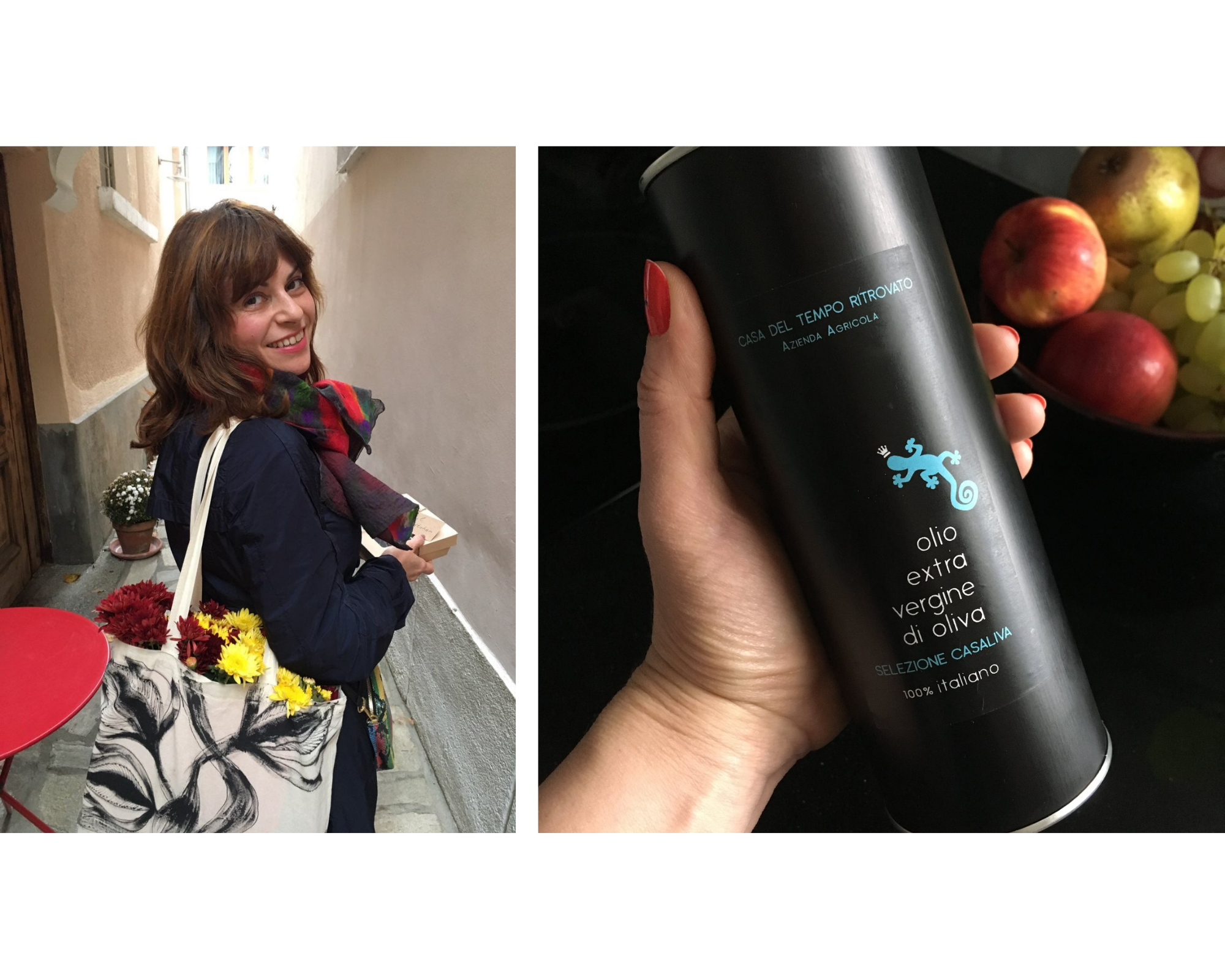
There are 5 points that I always draw attention to when we take a bottle of olive oil in our hands:
The packaging: I recommend it be dark glass or metal, a guarantee of minimal influence from UV rays. Olive oil is very sensitive to light and changes its qualities over time. I do not advise buying bottles from shelves exposed to direct sunlight; the oil goes rancid faster.
The shelf life: it speaks of the freshness of the oil and must be clearly stated on the packaging. The ideal option is to have the harvest year/month marked, preferably the most recent one. For the northern hemisphere and the Mediterranean at present this is 20/21, with the picking of the fruit usually from the end of September to December, depending on the variety, the concentration of Omega 9 and polyphenols, as well as the style of olive oil the producer is aiming for. As the farmers say, “nature knows best”: the natural specifics of each year determine the start of picking (for example, if flowering is later, as is happening this spring, the fruit, instead of being ready in early or mid-October, is expected to be picked in early November). When there is only a “best before” indication, we look for the furthest date, for the 20/21 harvest this is the year 2022, the months after April (on average 18 months from the harvest/extraction and bottling).
Designation and terms: useful and specific information that guarantees origin and quality - country/region, olive variety for single-variety oils or blend for multi-variety ones. Every producing country has a geographic categorization similar to wine - PGI or PDO, which are top-level designations. I have come across bottles (usually of supermarket olive oils) that state as origin “EU and non-EU countries”, and I do not advise buying them, since it is very likely that oils from different countries and harvests are mixed and the quality is in question, as is traceability. It is important to look for the designations “extra virgin” and “cold extraction” (cold extraction/ cold extracted), which are a guarantee of high quality without defects, thanks to the closed process of extracting the oil, without access to oxygen. Sometimes on labels I see the designation “cold pressed” and I do not recommend choosing such an olive oil because of possible defects resulting from extraction with a traditional hydraulic press and interaction with air.
Manufacturer: it is good to write down the specific companies you should pay attention to, especially when you like the olive oil. And when you have the chance to taste the product before purchase, I recommend looking for freshness and purity of aroma and taste, as well as the presence of the three components of taste: bitterness, pungency and fruitiness. If the oil is neutral in these characteristics, it would be suspicious if the packaging says extra virgin.
The price: it depends heavily on whether the variety is mass-market or regional, whether the olive oil is single-variety, on the scale of the producer, the plantations and their cultivation, whether it is artisanal with predominantly manual labor, sustainable and organic practices, whether the company is rather a blending and bottling one, etc. My experience over the years suggests that distinctive artisanal olive oils with individuality of character have a price at the lower limit of 35-40 BGN for 500 ml. These olive oils we definitely note down and buy again, as we do with wines. They are for finishing dishes before serving, and the amount we use is modest because of their expressive character. In the mid price class, usually more versatile multi-variety extra virgin olive oils, prices average 25-35 BGN for 500 ml. And those we cook with using heat are priced in the range of 22-28 BGN per liter and are simple and unpretentious. Choosing products priced at 10-15 BGN per liter is not serious and their quality is certainly questionable (they may contain other vegetable oils besides refined olive oil, and old harvests).
There are three commercial categories that we can buy in the countries of the European Union. In Bulgaria the name olive oil, rather than zehtin, is established by regulation, and it is the one we will find on the label.
Extra virgin olive oil:
This is the highest category, a 100% natural product extracted directly from the olive fruit, solely and exclusively by mechanical means and at a strictly controlled low temperature of up to 27°C.
This category has a permitted acidity (free fatty acids) of up to 0.8% and no defects. Thanks to the purity of the extraction process, it naturally preserves the beneficial and unique polyphenols that make extra virgin without an alternative among other fats.
Cold-extracted (cold extraction) extra virgin olive oil usually has well-pronounced fruitiness (freshness of the olive fruit) both on the nose and on the palate. It has a golden color to one with green notes. It is pleasant in feel and fluidity/density and does not “weigh down” the mouth. It has bitterness and pungency, which, depending on the variety, picking period and style, range from delicate to intense. We can sense and recognize aromas and flavors of herbs, wildflowers, freshly cut grass or hay, fruits - ripe or still green, leafy vegetables, nuts, spices (sweet and hot) and other natural aromas.
Olive oil
This category contains refined olive oils and virgin olive oils (natural, with a higher permitted acidity of up to 2% and some defects, most often resulting from fermentation of the fruit, improper storage and an incorrect production process).
The acidity of this lower-quality category is up to 1%. Olive oil has an altered color, visible in the transparent bottles in which it is usually sold - straw-colored and light. It “weighs” in the mouth and sits considerably more heavily. Without pronounced flavors and aromas of the olive fruit, herbs, spices, etc. It feels neutral due to the neutralization of off-aromas and defects during refining.
Some of the health-promoting polyphenols are neutralized, though it is important to know that the beneficial properties of oleic fatty acid (Omega 9) are preserved.
Olive pomace oil
This lowest category contains oils obtained from the refining of olive pomace (a residual product after the cold extraction of extra virgin), as well as oils extracted directly from the olive fruit. The natural, aromatic and health characteristics are neutralized. Like olive oil, the feel is neutral. The packaging is usually plastic.
As an ambassador of a nature-friendly way of living and eating, and of extra virgin, I always encourage using the highest category, and I strongly believe in the philosophy “less is more”.
In the next issue of the column in June, expect: olive oil and children (and why it is a myth that they do not like it)
*Anna Petkova is a certified olive oil sommelier from the prestigious program of the International Culinary Center and the Olive Oil Times Education Lab in New York. She has taken part in olive oil tastings and masterclasses in Portugal, Greece and Italy. She graduated in “Marketing and Management” at the UNWE, and her professional career includes 23 years in large international companies with leadership experience in Bulgaria, Russia and the Adriatic region, before entering the world of olive oil professionally. Anna is also a traveler and the creator of the page My Pure Olive, and is currently writing her first book.