

Artichoke and Olive Oil: Factors of Mastery
From the author’s series “Artichoke and Olive Oil” by Anna Petkova
Source: https://www.bacchus.bg/
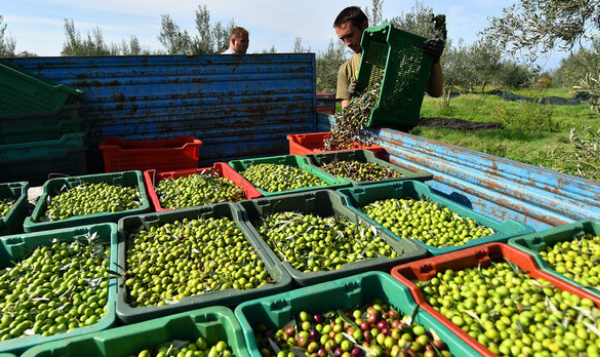
I recently asked several producers of high-end craft olive oil about mastery. What does it take? It is amazing how aligned their visions of the excellent and distinctive oil were. Before we move on to the specific factors, I will share what they said.
Lola Sagra, owner of Nobleza del Sur in Spain, says: “We farmers think about how to open the doors to spring, so that it never stops blooming in the olive grove. We do not work only to produce olive oil, but one that is full of life.”
Sala ben Ismail, co-owner of Reserve Familiale Ben Ismail in Tunisia, notes: “To make high-quality olive oil you need to master the entire ‘value chain’ (the term is from English, value chain – author's note) from the tree and the soil, through the process of malaxation and extraction, to storage and bottling. And to love your work. Preserving the flora and fauna is a guarantee for the consumer that this olive oil respects biodiversity.” Here I would add that the olive tree is sacred in Tunisia, and he himself represents the new generation of farmers who are bringing the nobility of Tunisian varieties to the stage.
Eftychis Androulakis, owner of Pamako Mountain Bio EVOO in Greece, believes and practices: “Sustainable farming and production is crucial – not adapting nature to ourselves, but ourselves to it. This requires flexibility and technological innovation, in step with the cyclical nature and the changing of the climate.” He is an innovator himself and in recent years has introduced a number of innovations in their own cold-extraction mill for extra virgin olive oil on the island of Crete.
When the characteristics of harmony (between nose and taste, between bitterness and pungency), complexity and persistence of sensory impressions are present and clearly asserted, then the olive oil is bound to be of a level worthy of a competition. Here are the factors, described in more detail below.
What Does Extra Virgin Mean?
At the very beginning I would remind you that, by regulation, for an olive oil to carry the extra virgin classification it must be nothing other than pure fruit juice, with no additives or alterations. It is extracted solely by mechanical means.
Fruit Ripeness and Harvest
We continue the conversation about how important the fruit itself is, and its correct, timely ripeness. It is extremely important that the olive keeps its integrity, with no damage to the surface, so that fermentation processes and a change in quality due to oxidation do not begin. You may have seen in photos the nets stretched under the trees and the pickers with electric poles – combs – that detach the fruit from the branches in the gentlest way.
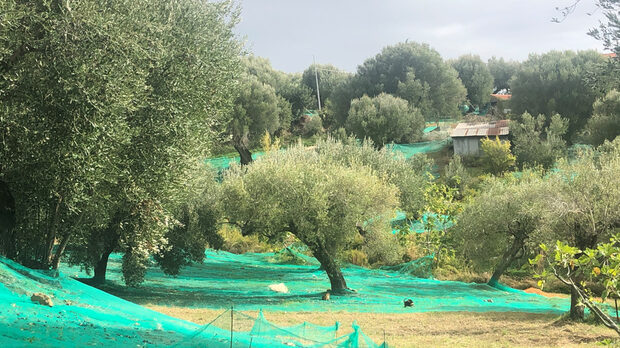
To preserve the bouquet of aromas as well as high polyphenols, it is essential that the harvest begins at the start of the fruit's color change, not when it is already fully colored. The quantity of olives needed to produce 1 liter is then higher: over 10-12 kg of healthy fruit.
Of course, if the aim is a quality but simpler olive oil with sweeter and riper notes, then the harvest is in November, even December. There is also a middle and mixed path, especially with blends. And, quite logically, the harvest can last a month to 45 days, so the producer's price portfolio can also be better balanced between a medium and a high price class, or between good and excellent/exceptional olive oils, in order to meet the needs of different consumers and purposes in the kitchen.
Characteristics of the Harvest
Taking account of the year and its specifics also contributes to mastery. This year, 2021, was generally late with flowering and with the ripening and filling out of the fruit. There were quite a few dry weeks in the Mediterranean and, especially for groves without additional irrigation, the harvest shifted by several weeks instead of the usual early October. With more and more conversations with farmers, we reach the point where at least one irrigation in summer, up to the harvest itself, is now necessary. Producers often, if they do not have an agronomist on the team, partner with one to get an assessment of the fruit's readiness and the ratio of lipids, water content and polyphenols.
Extraction, Processing and Technology
I build on the story with the process of cold extraction and technology as an outstanding factor of mastery. And perhaps this is the subtlety that separates mediocre from good and from excellent or exceptional olive oil. Producers with vision and long-term goals usually rely on their own resources in order to have control over the entire journey of the product. I know new and progressive farmers from Seville who for the first few years partnered with the mill of an elite colleague near Malaga, relying on the high-tech production capabilities available there. Despite this good partnership, they now have their own mill for the second season – an additional prerequisite for optimizing the cost of the products as well.
It is important to mention that a closed process of malaxation (mixing the paste to form flavors and polyphenols) and cold extraction at up to 27 degrees, without exposure to oxygen (as is the case with traditional stone mills), is key to the quality of the olive oil and its extra virgin characteristics (no defects, which we discussed in September). Also important is the controlled supply of air, which has a bearing on unlocking certain aromas during the malaxation itself.
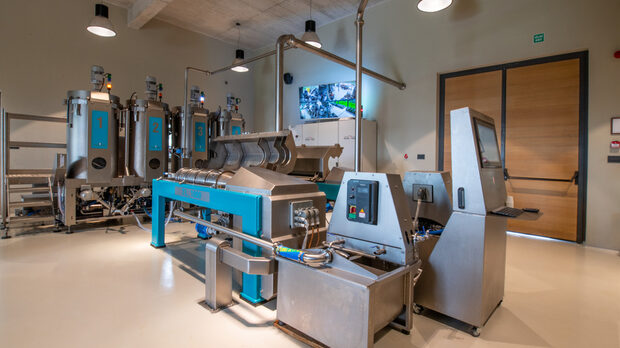
The presence of water (from washing the olives as a second step after defoliation) is a double-edged sword – if there is too much, it leads to defects; if it is completely eliminated, polyphenols may be lost. Knowing its exact presence is key. These are all subtleties that the “miller” knows. It is no accident that this profession is so valued. And I am lucky to know the number one miller for 2018 in California, Pablo from Argentina, who travels the world as a consultant, including in Aegean Turkey.
Such is the world of olive oil, intriguing and many-faceted, and that is why falling in love is inevitable.